
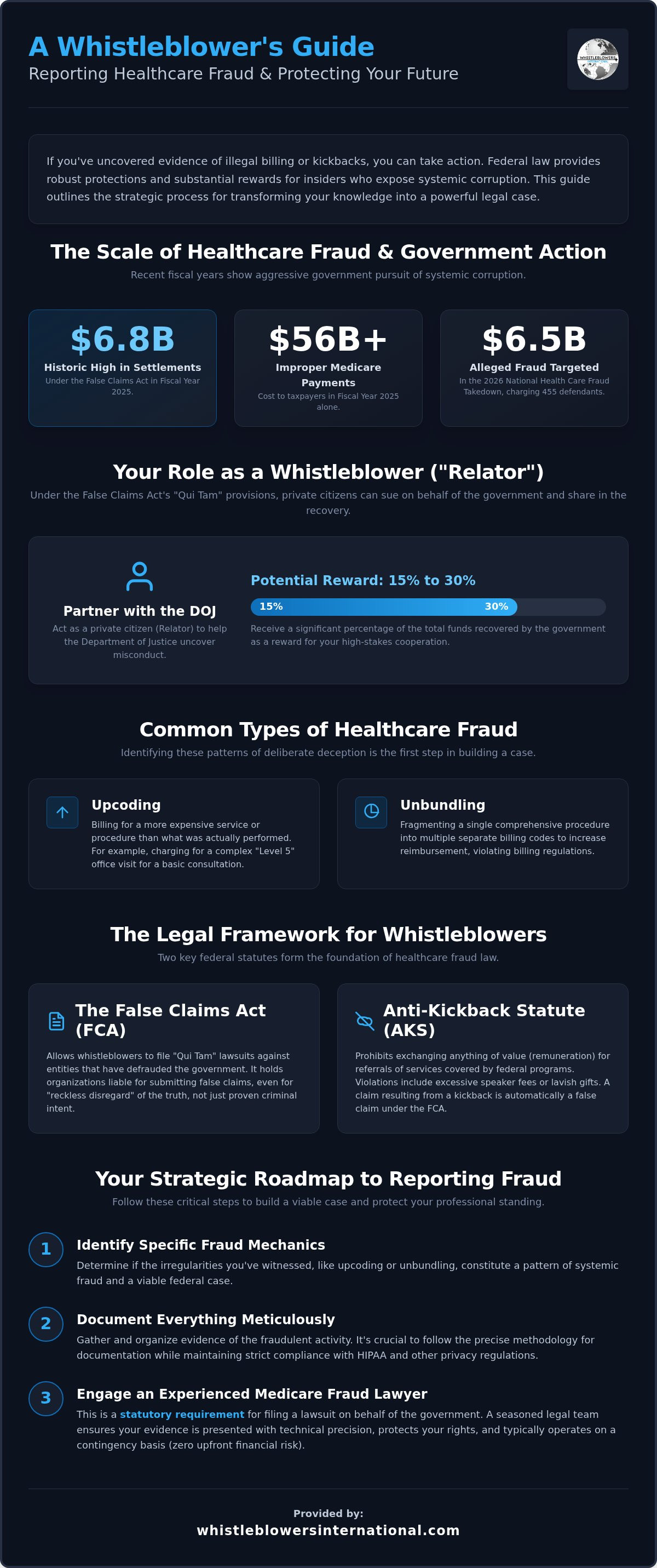
In fiscal year 2025, settlements and judgments under the False Claims Act reached a historic high of over $6.8 billion, proving that the government is more aggressive than ever in pursuing systemic corruption. If you’ve uncovered evidence of illegal billing or kickbacks within your organization, you’re likely grappling with the weight of that knowledge. It’s natural to feel paralyzed by the fear of workplace retaliation or the sheer complexity of federal law. You want to do the right thing, but you also need to know that your career and your family’s future won’t be the price of your integrity.
This guide serves as your strategic roadmap for moving through the reporting process with precision and security. By partnering with an experienced medicare fraud lawyer, you can transform your insider knowledge into a powerful legal action that holds bad actors accountable. We’ll outline how to document your findings effectively, explain the robust protections available to you under the False Claims Act, and detail the criteria for receiving a reward between 15 and 30 percent of the government’s recovery. You’ll gain a clear understanding of the 2026 enforcement environment, including the latest statute of limitations and the specific types of evidence that trigger government intervention.
Key Takeaways
- Identify the specific mechanics of healthcare fraud, such as upcoding and unbundling, to determine if the irregularities you have witnessed constitute a viable federal case.
- Navigate the “Qui Tam” provisions of the False Claims Act to secure a potential reward of 15% to 30% of the total funds recovered by the government.
- Learn the precise methodology for documenting fraudulent activity while maintaining strict compliance with HIPAA and other critical privacy regulations.
- Understand why engaging a seasoned medicare fraud lawyer is a statutory requirement for filing a lawsuit on behalf of the government and protecting your professional standing.
- Leverage the expertise of a battle-tested legal team that operates on a contingency basis, ensuring your pursuit of integrity involves zero upfront financial risk.
What Is Healthcare Fraud and Why Does the Government Reward Reporting?
At its core, What Is Healthcare Fraud? involves any intentional deception or misrepresentation made by an individual or entity with the knowledge that the deception could result in some unauthorized benefit. In the complex ecosystem of federal programs, this often manifests as providers billing for services never rendered, falsifying patient records, or inflating the costs of procedures. While some believe that fraud requires a “smoking gun” of criminal intent, the law also recognizes “reckless disregard” for the truth as a basis for liability. This distinction is critical; it means an organization cannot simply look the other way when its billing department systematically overcharges the government.
The financial impact of these schemes is staggering. In fiscal year 2025 alone, improper payments in Medicare cost taxpayers more than $56 billion. Because the government cannot monitor every single transaction across the vast healthcare landscape, it relies on private citizens to act as “Relators.” A Relator is a whistleblower who partners with the Department of Justice to uncover hidden misconduct. To incentivize this high-stakes cooperation, the government offers substantial financial rewards and legal protections. Engaging an experienced medicare fraud lawyer is the most effective way to ensure your evidence is presented with the technical precision required to trigger a federal investigation.
The Massive Scale of Federal Healthcare Recoveries in 2026
The Department of Justice and the Centers for Medicare & Medicaid Services (CMS) have entered 2026 with an unprecedented focus on Medicare Part C and D fraud. The government’s 2026 National Health Care Fraud Takedown has already resulted in charges against 455 defendants involving over $6.5 billion in alleged fraud. Because these schemes are often buried deep within proprietary software or complex coding algorithms, federal agencies depend on insiders to bridge the gap between data analytics and actionable proof. When an investigation is successful, recoveries often reach hundreds of millions of dollars, reflecting the massive scale of the original theft from the public treasury.
Understanding the Anti-Kickback Statute (AKS)
The Anti-Kickback Statute is a foundational pillar of healthcare law that prohibits the exchange of anything of value in return for referrals for services covered by federal programs. In the current investigative climate, the government is scrutinizing “remuneration” that takes subtle forms, such as excessive speaker fees for physicians or lavish gifts disguised as marketing expenses. If a hospital or pharmaceutical company provides financial incentives to a doctor to prioritize a specific drug or facility, they’ve violated the AKS. These violations are particularly significant because any claim for payment that results from an illegal kickback automatically triggers liability under the False Claims Act. If you’ve witnessed these “pay-to-play” arrangements, a medicare fraud lawyer can help you determine if the conduct constitutes a violation of these strict federal standards.
Common Types of Healthcare Fraud Reported to Federal Agencies
Identifying the specific mechanics of fraud is the first step toward building a successful case. While some organizations attempt to dismiss billing irregularities as administrative oversight, true fraud involves a pattern of deliberate deception. When you consult with a medicare fraud lawyer, they will evaluate your evidence against the specific thresholds of the False Claims Act to determine if the conduct represents a systemic effort to defraud the government. The Department of Justice’s Health Care Fraud Unit serves as the primary authority for Reporting Healthcare Fraud to the Government, and they focus on several core billing violations that drain federal resources.
- Upcoding: This involves billing for a more expensive service than what was actually performed. An example is charging for a complex “Level 5” office visit when only a basic consultation occurred.
- Unbundling: Providers sometimes fragment a single procedure into multiple billing codes to increase their total reimbursement, bypassing the standard “bundled” rate set by Medicare.
- Phantom Billing: The submission of claims for patients who were never seen, services that were never rendered, or medical equipment that was never delivered.
- Medical Necessity Fraud: A particularly egregious practice where clinicians perform invasive surgeries, diagnostic tests, or therapies that the patient did not clinically require.
Pharmaceutical and Medical Device Fraud
Pharmaceutical companies frequently violate federal law by engaging in off-label marketing, which involves promoting drugs for conditions or patient populations not approved by the FDA. Another sophisticated scheme is “Best Price” fraud. This occurs when manufacturers fail to report their lowest prices to the Medicaid Drug Rebate Program, effectively overcharging the government. For those working within these corporations, reporting pharmaceutical fraud anonymously is often the safest path to exposing these multi-million dollar schemes. If you have evidence of these practices, a medicare fraud lawyer can help you structure your disclosure to maximize its impact while protecting your career.
Home Healthcare and Hospice Schemes
Home healthcare and hospice fraud have seen a sharp increase in federal scrutiny throughout 2026. Schemes often involve the fraudulent certification of patients for hospice care who do not meet the terminal illness criteria, which requires a life expectancy of six months or less. Providers may also pay kickbacks to “patient recruiters” who identify and enroll individuals in home health services they do not require. To prove these recurring patterns, you’ll need to document specific instances where clinical staff were pressured to alter diagnoses or ignore medical guidelines. If you are unsure how to proceed, you can securely evaluate your case with a professional team that understands the nuances of these specific industries.
The False Claims Act: How Qui Tam Lawsuits Function
The civil legal system provides a unique mechanism for individuals to combat systemic corruption within the healthcare industry. Under The False Claims Act and Qui Tam Lawsuits, private citizens act as “relators,” initiating litigation that the government might otherwise never uncover. This isn’t a typical lawsuit; it’s a strategic partnership where you provide the evidence and the government provides the enforcement power. The financial incentives are designed to reflect the significant professional risk taken by the relator. If your case leads to a successful recovery, the government pays your reward directly from the collected fines and penalties, which as of April 2026 range from a minimum of $14,308 to a maximum of $28,619 per false claim.
A critical component of your eligibility for these rewards is the “Original Source” requirement. To qualify as a relator, your information must be non-public. You can’t simply report what you read in a news article or saw in a public audit; you must have independent and direct knowledge of the fraud. This is why engaging a medicare fraud lawyer is essential early in the process. They help you structure your “disclosure statement” to prove you are the primary source of the information, ensuring your claim isn’t dismissed on technical grounds before the investigation even begins.
The “First to File” Rule
Timing is not just a preference in whistleblower law; it’s a jurisdictional requirement. The “First to File” rule dictates that only the first relator to bring a specific fraud to the government’s attention is eligible for a percentage of the recovery. If a colleague or a competitor files a similar claim even one day before you, your case may be barred entirely. This creates a high-stakes environment where waiting to see if internal conditions improve can result in losing all legal standing. For a deeper look at these procedural hurdles, review the False Claims Act guide to understand how to protect your status as the lead relator.
The Role of the Department of Justice (DOJ)
Once your medicare fraud lawyer files the complaint, it remains “under seal” while the DOJ investigates the allegations. During this period, the government decides whether to “intervene.” If the DOJ intervenes, they take the primary lead in the litigation, which significantly increases the likelihood of a settlement. In cases of intervention, the relator’s reward is typically 15% to 25%. If the government declines to intervene, you have the right to pursue the case independently with your legal team, potentially increasing your share to 25% or 30% of the recovery. A seasoned advocate knows how to present evidence so compellingly that the DOJ feels compelled to join the fight and maximize the recovery for all parties involved.
How to Document Healthcare Fraud Without Violating Privacy Laws
The success of a qui tam lawsuit depends entirely on the quality of your evidence, yet the process of gathering that evidence is fraught with legal landmines. Many well-intentioned whistleblowers jeopardize their cases by engaging in “self-help” discovery, which involves taking documents they aren’t authorized to possess. If you remove original files or access records outside your normal job duties, you may inadvertently provide your employer with grounds for a countersuit or a legitimate reason for termination. By consulting a medicare fraud lawyer before you act, you can ensure your documentation strategy aligns with federal evidentiary standards while remaining within the bounds of your employment contract.
To build a formidable case, you should follow a methodical approach to data collection:
- Identify Patterns: Focus on recurring examples of fraudulent billing rather than isolated errors. The government is interested in systemic misconduct that suggests a deliberate policy of overcharging.
- Secure Proof Safely: Only retain documents that you have legitimate access to during your daily work. Don’t go “fishing” in departments where you don’t belong.
- Chronicle the Misconduct: Maintain a detailed timeline of events. Include the names of decision-makers who authorized the billing practices and the dates when specific fraudulent claims were submitted.
- Consult Counsel Early: Before you take any digital or physical documents outside the building, seek the strategic guidance of a medicare fraud lawyer to determine which items are legally protected.
- Maintain Absolute Silence: Do not discuss your findings or your intent to report with coworkers. Even the most trusted colleague might inadvertently alert management, triggering an internal “cleanup” that destroys evidence.
HIPAA and the Whistleblower Exception
Healthcare providers often use the Health Insurance Portability and Accountability Act (HIPAA) as a shield to discourage reporting. However, federal regulations include a narrow whistleblower exception (45 CFR § 164.502(j)(1)) that permits employees to share patient data with their legal counsel if they believe in good faith that the provider has engaged in unlawful conduct. You must be careful not to “over-collect” irrelevant patient data, as this can still lead to privacy violations. For a more detailed breakdown of what constitutes acceptable evidence, refer to this guide on how to document corporate fraud.
Protecting Your Identity: Filing Under Seal
One of the most significant protections offered by the False Claims Act is the requirement that cases be filed “under seal.” This means the lawsuit is kept secret for at least 60 days, during which time the Department of Justice can investigate the allegations without the employer knowing a report was made. This period is vital for protecting your identity while the government validates your claims. Understanding how a whistleblower lawyer protects your identity can alleviate the fear of immediate retaliation. If you have questions about specific documents you’ve already gathered, you can request a confidential case evaluation to ensure your next steps are legally sound.
Why Expert Legal Representation Is Required for Healthcare Reporting
The legal architecture of the False Claims Act is unique in that it prohibits individuals from filing a qui tam action “pro se,” or on their own behalf. Because a relator technically represents the interests of the United States government, federal courts require that an attorney handle the proceedings to ensure the case meets rigorous procedural and ethical standards. Partnering with a specialized medicare fraud lawyer is not merely a recommendation; it is a statutory necessity that protects the integrity of the claim. Without professional counsel, your insights into systemic corruption, no matter how compelling, cannot be transformed into a formal legal action.
A qualified medicare fraud lawyer acts as more than just a legal representative; they are strategic investigators who understand how to package evidence for maximum impact. Piacentile & Associates LLP operates on a contingency fee basis, meaning our firm assumes the entire financial risk of the litigation. You shouldn’t ever pay hourly fees for whistleblower reporting. Our interests are perfectly aligned with yours: we only succeed if the government recovers funds and you receive your statutory reward. This model ensures that high-level legal advocacy is accessible to anyone with the courage to speak out, regardless of their personal financial resources.
The Piacentile & Associates Investigative Advantage
Our firm provides a sophisticated level of scrutiny that general practice firms cannot match. We evaluate every potential case against the exact standards used by the Department of Justice to ensure it’s “intervention-ready” before it’s ever filed. Because our team includes former whistleblowers, we possess an intimate understanding of the emotional and professional stakes involved. This “battle-tested” perspective allows us to act as both your legal powerhouse and your protective mentor. We also maintain a global reach, representing individuals across the world who have evidence of fraud impacting U.S. federal programs. We don’t just file paperwork; we build airtight investigative files that demand government attention.
Your Next Steps: The Confidential Consultation
The path from discovering fraud to securing a recovery begins with a single, protected conversation. During your initial case evaluation, we’ll review the evidence you’ve gathered and determine if the conduct meets the specific criteria for a False Claims Act violation. It’s a methodical process designed to provide you with a realistic assessment of your case’s viability without any upfront cost. Every detail you share is protected by attorney-client privilege, ensuring your identity remains secure while we evaluate the best strategic move for your career and your future. If you’re ready to hold your organization accountable, secure your confidential evaluation now and take the first step toward becoming a vital partner in federal justice.
Securing Your Future as a Federal Relator
The decision to expose systemic healthcare fraud is a defining moment that requires both courage and a calculated legal strategy. By understanding the nuances of the False Claims Act and the critical importance of the “First to File” rule, you’ve already taken the first step toward protecting the public treasury and your own career. Success in these high-stakes matters depends on your ability to document misconduct without overstepping privacy boundaries, a process that’s best navigated alongside a seasoned medicare fraud lawyer.
Piacentile & Associates LLP offers a unique investigative advantage, as our firm is led by a former whistleblower who possesses an insider’s perspective on the emotional and professional risks you face. With decades of experience in high-level federal investigations, we provide the elite advocacy needed to present your case effectively to the Department of Justice. Because we operate on a contingency-based fee structure, we only get paid if you win, ensuring that your pursuit of integrity involves no upfront financial burden. If you’re ready to move from observation to action, speak with an experienced healthcare whistleblower lawyer at Piacentile & Associates LLP. You don’t have to navigate this complex process alone; we’re here to ensure your voice is heard and your future is secured.
Frequently Asked Questions
Can I report Medicare fraud anonymously?
Yes, you can maintain your anonymity during the investigative process by filing your claim through a medicare fraud lawyer. Under the False Claims Act, your complaint is filed “under seal,” which means the court keeps the lawsuit secret while the Department of Justice evaluates your evidence. This protective mechanism allows the government to conduct a thorough investigation into your employer without revealing your identity during the critical early stages of the case.
What is the average reward for reporting healthcare fraud?
Whistleblowers are entitled to receive between 15% and 30% of the total funds recovered by the government. In fiscal year 2025, settlements and judgments under the False Claims Act exceeded $6.8 billion, demonstrating the significant financial stakes involved in these federal proceedings. If the government intervenes in your case, your reward is typically 15% to 25%; if they do not intervene and you proceed independently, the reward increases to a range of 25% to 30%.
Will I lose my job if I report my employer for fraud?
Federal law strictly prohibits employers from retaliating against whistleblowers who report fraud in good faith. The False Claims Act includes robust anti-retaliation provisions that allow for reinstatement, double back pay, and compensation for legal fees if you’re terminated or harassed. While the threat of workplace tension is a common concern, your legal team acts as a resolute shield to ensure your professional standing and financial security remain protected throughout the litigation.
Do I need a lawyer to report healthcare fraud to the government?
Yes, federal courts require that an individual be represented by a qualified medicare fraud lawyer to file a qui tam lawsuit. Because you’re technically litigating on behalf of the United States, you cannot represent yourself “pro se” in these specific types of actions. An experienced attorney ensures that your complaint meets the “particularity” requirements of the law and effectively manages the complex relationship with the Department of Justice investigators.
What evidence do I need to prove healthcare fraud?
You need specific, non-public evidence that demonstrates a systemic pattern of misrepresentation or “reckless disregard” for federal billing rules. This typically includes internal emails, billing logs, patient records that contradict submitted claims, and a detailed timeline of events. The government prioritizes cases supported by “insider” documentation that proves the fraud was a deliberate corporate policy rather than a series of isolated administrative mistakes.
How long does a healthcare whistleblower case take?
Whistleblower cases are methodical processes that typically take several years to reach a final resolution or settlement. While the initial seal period is at least 60 days, the government frequently requests extensions to conduct a thorough investigation into the allegations. Patience is a requirement in federal litigation, as the Department of Justice must validate every claim before moving forward with an intervention or settlement negotiations.
Can a non-U.S. citizen receive a reward for reporting fraud?
Citizenship status isn’t a barrier to receiving a whistleblower reward under U.S. federal programs. As long as the fraudulent activity impacts U.S. government funds, such as Medicare or Medicaid payments, the relator is eligible for a percentage of the recovery regardless of where they live or hold citizenship. Our firm frequently assists international whistleblowers in navigating the complexities of the False Claims Act from a global perspective.
What is the difference between a billing error and healthcare fraud?
The primary distinction lies in the concepts of intent and “reckless disregard” for federal regulations. A billing error is typically an isolated, accidental mistake, whereas healthcare fraud involves a recurring pattern of deception used to maximize reimbursement. If an organization consistently ignores red flags or implements training that encourages improper coding, those actions move beyond administrative error into the territory of actionable fraud.