
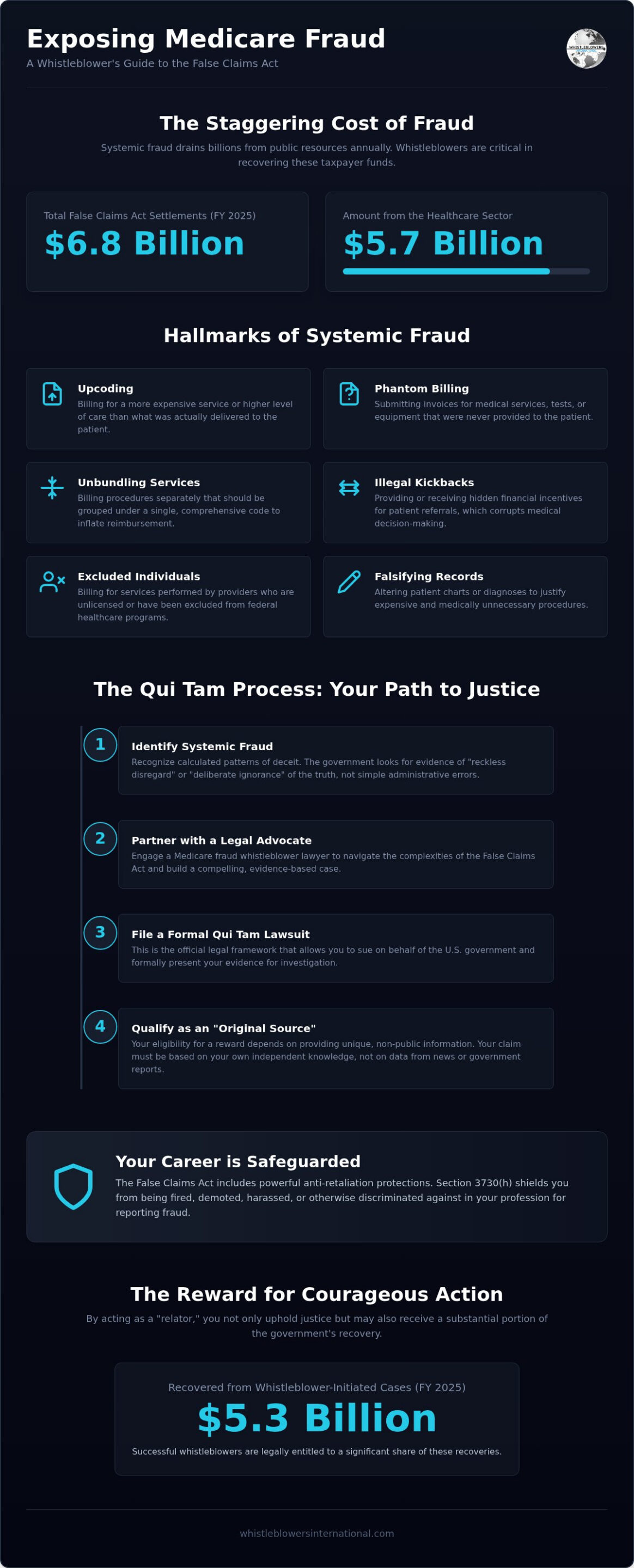
In fiscal year 2025, the Department of Justice secured a record-breaking $6.8 billion in False Claims Act settlements, with $5.7 billion stemming from the healthcare sector. This historic level of enforcement underscores why many professionals seek a medicare fraud whistleblower lawyer to navigate the path toward justice without sacrificing their careers. You likely feel the weight of this responsibility, coupled with anxiety regarding HIPAA compliance, blacklisting, or the complexity of federal litigation. It’s natural to hesitate when your livelihood and reputation are on the line.
By partnering with an elite legal advocate, you aren’t just hiring an attorney; you gain a battle-tested mentor who understands the strategic nuances of the False Claims Act (31 U.S.C. §§ 3729-3733). You will discover how to strategically report Medicare fraud, secure your professional future, and qualify for a substantial government reward with elite legal advocacy. This guide provides a roadmap for the 2026 legal landscape, detailing how to build a bulletproof case and maintain anonymity. If you choose to step forward, then having a seasoned ally to manage the complexities of a Qui Tam filing ensures the best possible outcome.
Key Takeaways
- Identify the specific hallmarks of systemic fraud, such as upcoding and phantom billing, that meet the threshold for federal litigation.
- Understand why a formal Qui Tam filing with a medicare fraud whistleblower lawyer provides the legal framework necessary to secure a government reward.
- Learn how the “Original Source” rule prioritizes your unique insider information to establish a valid claim under the False Claims Act.
- Explore the comprehensive career protections under Section 3730(h) that shield you from employer reprisal and professional blacklisting.
- Discover how a dedicated investigative team can refine your evidence into a compelling case that maximizes the likelihood of government intervention.
Identifying Medicare Fraud: What Constitutes a Federal Violation?
Medicare fraud isn’t merely a series of administrative errors; it is a systemic drain on public resources that costs the government between $60 billion and $100 billion annually. What constitutes a federal violation is rarely a single misplaced decimal point. Rather, it’s a calculated pattern of deceit designed to siphon funds from federal programs. If you observe systemic overbilling in your workplace, consulting a medicare fraud whistleblower lawyer is the first step toward validating whether those patterns meet the legal criteria for a federal case.
One of the most frequent violations involves “upcoding,” where providers bill for a more expensive service or higher level of care than what was actually delivered. This often pairs with phantom billing, a practice where invoices are submitted for medical services, diagnostic tests, or durable medical equipment that patients never received. Beyond billing, illegal kickbacks for patient referrals corrupt the integrity of healthcare decisions. These schemes often involve hidden financial incentives to steer patients toward specific providers or services, which is strictly prohibited under federal law. Furthermore, off-label pharmaceutical marketing and performing procedures that lack medical necessity represent significant areas of liability that the government aggressively pursues.
Common Medicare and Medicaid Fraud Schemes
- Unbundling services: This involves taking a group of procedures that should be billed under a single, comprehensive code and separating them into multiple codes to artificially inflate the total reimbursement.
- Billing for excluded individuals: Facilities may attempt to hide the status of providers who have been unlicensed or excluded from federal programs to continue claiming federal funds for their work.
- Falsifying patient records: This tactic involves altering charts or diagnoses to justify expensive, medically unnecessary procedures that the patient did not require or request.
The Threshold for Federal Intervention
Healthcare fraud is an intentional “knowing” deception of the government for financial gain. The Department of Justice prioritizes these cases because healthcare fraud accounted for over $5.7 billion of the total recoveries in fiscal year 2025. Since the False Claims Act was strengthened in 1986, it’s become the primary tool for recovering these lost funds. A medicare fraud whistleblower lawyer helps distinguish between simple clerical errors, which are administrative in nature, and systemic fraudulent intent. The government doesn’t look for honest mistakes. It looks for evidence of “reckless disregard” or “deliberate ignorance” of the truth, which serves as the trigger for a high-stakes federal investigation.
The False Claims Act: How Whistleblowers Qualify for Rewards
The False Claims Act empowers private citizens to act as “relators” by filing lawsuits on behalf of the United States government. As detailed by the Department of Justice on the False Claims Act, this unique legal framework allows individuals with direct knowledge of fraud to initiate civil actions that recover taxpayer funds. In 2025 alone, over $5.3 billion was recovered from cases initiated by whistleblowers, highlighting the critical role that insiders play in federal enforcement. However, filing a claim requires more than just a suspicion; it requires a strategic legal approach to meet specific statutory requirements.
To qualify for a reward, you must satisfy the “Original Source” rule. This requirement dictates that your evidence cannot be based on publicly disclosed information, such as news reports, government audits, or judicial hearings. Instead, the information must stem from your own independent knowledge or observations. A seasoned medicare fraud whistleblower lawyer ensures your disclosure is structured to prove you are the primary source of the information, which is essential for maintaining your eligibility for a financial award. If the government is already aware of the fraud through public channels, your ability to claim a reward may be barred.
The government evaluates every filing to determine if it will “intervene” in the case. In 2026, the typical timeline for a federal whistleblower action remains a multi-year process. During this period, federal agents and prosecutors conduct a thorough investigation to verify the scale of the fraud and the strength of your evidence. Their decision to intervene often hinges on the clarity and volume of the documentation you provide at the outset.
Calculating the Medicare Fraud Whistleblower Reward
Rewards are structured to incentivize high-quality reporting and the assumption of personal risk. If the government intervenes and successfully secures a settlement or judgment, the whistleblower is entitled to a share of the recovery, typically ranging from 15% to 25%. In instances where the government declines to intervene but you proceed with your medicare fraud whistleblower lawyer and win, the reward increases to between 25% and 30%. Factors that influence your specific percentage include the quality of your evidence and the level of assistance you provide during the litigation. For a deeper look at how these cases are funded, consult our Whistleblower Lawyer Contingency Fees: A Comprehensive 2026 Guide.
Anonymity and the Seal Requirement
To protect the integrity of the investigation, every Qui Tam case is filed “under seal.” This means the lawsuit is kept secret from the defendant and the general public while the government builds its case. The seal typically lasts for at least 60 days, but it is frequently extended for months or even years as the investigation unfolds. Your attorney plays a vital role in maintaining your privacy during this period, ensuring that your identity is shielded from your employer for as long as possible. If you have concerns about your professional standing, evaluating your case with an expert can provide clarity on these protective measures and help you plan your next steps with confidence.
Strategic Reporting: Why a Qui Tam Lawsuit Beats a Government Hotline
While government hotlines are frequently advertised as the primary method for reporting misconduct, they often function as administrative dead-ends for those seeking justice and financial rewards. A simple tip submitted to an Office of Inspector General (OIG) hotline lacks the legal weight of a formal Qui Tam lawsuit. When you call a hotline, you’re merely providing information that may or may not be investigated; you aren’t initiating a legal action that grants you “relator” status. To secure your right to a reward and ensure the Department of Justice (DOJ) prioritizes your claims, you must file a comprehensive Disclosure Statement through a medicare fraud whistleblower lawyer.
The False Claims Act operates under a strict “first-to-file” rule. This means that only the first person to file a lawsuit based on a specific set of fraudulent facts is eligible for a share of the recovery. If you delay by waiting for a hotline response while another insider files a formal complaint, your claim will be barred regardless of how much evidence you possess. An elite lawyer builds a “bulletproof” case by meticulously validating your data before it reaches federal prosecutors, making it nearly impossible for the government to ignore the potential for a high-value recovery.
Evidence Preservation Without Violating HIPAA
Successful litigation depends on your ability to prove “intent” and “knowledge” through documented internal communications. However, you must be extremely careful when gathering evidence from your workplace. While billing logs, internal emails, and policy memos are essential, removing protected health information (PHI) can lead to HIPAA violations that jeopardize your case. You should focus on documents that show the “how” and “why” of the fraud, such as memos instructing staff to upcode or emails dismissing compliance concerns. A medicare fraud whistleblower lawyer will guide you on the “dos and don’ts” of evidence collection, often collaborating with professional services like Universal Investigations Agency to ensure your actions remain within the bounds of the law.
One of the most dangerous errors a whistleblower can make is “going public” or alerting the media before their case is filed under seal. Doing so can tip off the defendant, allowing them to destroy evidence, and it may even disqualify you from receiving a reward under the False Claims Act’s public disclosure bar. Similarly, attempting to negotiate with your employer internally often results in immediate retaliation rather than a resolution. To understand the full scope of these legal requirements, read our detailed analysis on The False Claims Act: A Comprehensive Guide for Whistleblowers in 2026. Professional silence is your greatest asset until your legal team has secured your position with the federal government.
Safeguarding Your Career: Legal Protections Against Retaliation
Fear of professional blacklisting is the primary reason individuals hesitate to report systemic fraud. Section 3730(h) of the False Claims Act provides a robust legal shield designed specifically to counter these risks. If an employer takes adverse action against you because of your involvement in a Qui Tam filing, the law provides substantial remedies. A medicare fraud whistleblower lawyer ensures that these protections are invoked the moment your case is filed, shielding you from the weight of corporate intimidation.
The remedies available under the federal statute are comprehensive and designed to make the whistleblower whole. They include reinstatement with the same seniority status, double back pay plus interest, and compensation for any special damages sustained as a result of the discrimination, such as litigation costs and reasonable attorney’s fees. While the financial rewards of a successful case are significant, these anti-retaliation provisions serve to stabilize your career and financial standing while the legal process unfolds. An elite legal team doesn’t just file your case; they manage the psychological reality of whistleblowing by providing the strategic mentorship needed to navigate a high-stakes environment.
What Qualifies as Retaliation?
Retaliation is not always as overt as a termination notice. It often manifests as “quiet firing,” where an employer systematically reduces your responsibilities, excludes you from critical meetings, or creates a hostile work environment to force a resignation. In the healthcare sector, threats to professional licenses or future employability are particularly common tactics of intimidation. Documenting every instance of harassment, demotion, or change in job description is vital for building a secondary civil lawsuit to recover damages. If you suspect your employer is building a case to terminate you, securing legal protection immediately is the only way to preserve your rights.
The Role of Confidentiality
Maintaining your anonymity is the primary defense strategy during the government’s initial evaluation phase. Because Qui Tam actions are filed under seal, your employer remains unaware of the lawsuit while federal investigators validate your evidence. Professional legal advocacy is the most effective deterrent against employer retaliation. The government has a statutory obligation to protect your identity while the investigation is active, providing a window of time to secure your professional future. A medicare fraud whistleblower lawyer acts as the buffer between you and the Department of Justice, ensuring your name isn’t disclosed until it is strategically advantageous to do so.
Maximizing Your Claim with Piacentile & Associates LLP
Piacentile & Associates LLP stands as a premier entity in the field of False Claims Act litigation, uniquely positioned by the firsthand experience of our founder (Dr. Joseph Piacentile, a former whistleblower and attorney). Unlike a traditional law firm, our perspective is shaped by having walked the path of a whistleblower, providing a level of empathy and strategic insight that others cannot replicate. When you engage a medicare fraud whistleblower lawyer from our team, you’re aligning with an advocate who understands the professional and personal stakes involved in challenging systemic corruption. We operate on a 100% contingency fee basis, meaning we only succeed when you secure a government award; this ensures our interests are perfectly aligned with the maximization of your recovery.
Our personality is that of a battle-tested mentor who understands the nuances of the field from multiple angles. We don’t just provide legal representation; we offer a strategic partnership that prioritizes your integrity and long-term success. By handling massive complexities with an insider’s perspective, we provide a sense of global reach and high-level influence that instills confidence in our clients. We recognize that the decision to step forward is difficult, which is why we offer risk-free legal representation to ensure that justice is accessible regardless of your financial situation.
Our High-Stakes Investigative Approach
Our firm employs a specialized investigative team, including former federal investigators, to transform raw information into a “bulletproof” case for the Department of Justice. By validating evidence with the same rigor used by government oversight agencies, we significantly increase the likelihood of federal intervention. This high-stakes approach is not limited by geography, as we maintain a global reach for reporting fraud against U.S. federal programs from any country. Our objective is twofold: to recover the maximum amount for the government and to secure the highest possible percentage for our clients. If your case involves complex financial structures or sophisticated billing algorithms, our investigative depth allows us to uncover patterns that others might overlook.
Taking the First Step Securely
The “first-to-file” rule remains a critical factor in any Qui Tam action, necessitating decisive action the moment fraud is identified. During your initial, no-cost consultation, we conduct a thorough and confidential evaluation of your evidence to determine its viability under federal statutes. We prioritize your privacy and professional future, acting as a seasoned mentor through every phase of the litigation. If you possess unique insider knowledge of healthcare fraud, the time to act is now. Delaying your report could mean losing your eligibility for a reward if another individual files a similar claim first. Contact Piacentile & Associates for a confidential consultation to begin the process of uncovering the truth and securing your reward.
Taking Decisive Action to Protect Your Future and the Public Trust
Reporting systemic healthcare fraud is a high-stakes decision that requires more than just a tip; it demands a structured legal strategy. By choosing a formal Qui Tam filing over a generic hotline, you secure your role as a relator and unlock the potential for a substantial government reward. These rewards, combined with the robust anti-retaliation protections of the False Claims Act, ensure that your integrity does not come at the cost of your career. It’s a path that requires precision, patience, and the right alliance.
Piacentile & Associates LLP provides the investigative depth and insider perspective necessary to navigate these complexities. Led by Dr. Joseph Piacentile, a former whistleblower himself, our firm specializes in high-value federal healthcare fraud recovery. Our contingency-based representation ensures you face zero upfront costs while we build a case designed for maximum impact. If you are ready to step forward, a medicare fraud whistleblower lawyer from our team will serve as your battle-tested mentor through every phase of the process. Secure your confidential consultation with our elite whistleblower advocates today. You possess the unique knowledge required to uncover the truth, and we possess the expertise to protect you while you do.
Frequently Asked Questions
Can I get a reward for reporting Medicare fraud?
Yes, whistleblowers are entitled to a financial reward under the False Claims Act if their information leads to a successful recovery. If the government intervenes in the case, the relator typically receives between 15% and 25% of the total settlement. If the government declines to intervene but the whistleblower proceeds with a medicare fraud whistleblower lawyer and wins, the reward increases to between 25% and 30% of the recovered funds.
Do I need a lawyer to report healthcare fraud to the government?
Yes, federal law requires individuals to be represented by legal counsel when filing a Qui Tam lawsuit on behalf of the United States. While anyone can submit a tip to a government hotline, only a formal lawsuit filed by an attorney grants you the status of a “relator” and eligibility for a reward. A specialized legal team ensures your evidence meets technical standards and protects your rights throughout the litigation process.
What is the statute of limitations for healthcare fraud whistleblowers?
The statute of limitations for filing a False Claims Act case is generally six years from the date the violation occurred. In some instances, the limit may be extended to three years after the government knew or should have known about the fraud, provided it does not exceed ten years from the violation. Because of the first-to-file rule, it’s critical to consult a professional early to ensure your claim is not barred by time.
Can I report healthcare fraud anonymously?
You can maintain anonymity during the initial investigative phase because Qui Tam lawsuits are filed “under seal.” This legal mechanism ensures that the defendant and the public are unaware of the case while the government evaluates your evidence. Your medicare fraud whistleblower lawyer acts as the primary contact for federal agents, shielding your identity for as long as possible. Many settlements are reached while the whistleblower’s identity remains confidential from the public.
What happens if I was involved in the fraud scheme myself?
Individuals who were involved in a fraud scheme can still file a claim, though their reward may be reduced if they planned or initiated the misconduct. The court has the discretion to decrease the whistleblower’s percentage based on their level of culpability. However, if a whistleblower is criminally convicted for their role in the fraud, they are legally barred from receiving any portion of the recovery. Early disclosure is the best way to mitigate these risks.
How much does it cost to hire a whistleblower attorney?
Hiring our firm involves zero upfront costs because we operate on a 100% contingency fee model. This means that our legal fees and investigative expenses are only paid out of a successful settlement or judgment. If there is no recovery, the client owes nothing for our services. This risk-free structure allows professionals to pursue justice and significant rewards without the burden of hourly legal bills or personal financial exposure during the litigation.
What is the difference between a tip and a Qui Tam lawsuit?
A tip is a simple disclosure of information that provides no legal standing or guaranteed reward for the person reporting it. In contrast, a Qui Tam lawsuit is a formal civil action that grants the whistleblower “relator” status and a statutory right to a share of the government’s recovery. Unlike a tip, a lawsuit requires the government to conduct a formal investigation and provides the whistleblower with legal protections against employer retaliation.
Will I be blacklisted from the healthcare industry for whistleblowing?
It is illegal for an employer to blacklist or retaliate against a whistleblower under Section 3730(h) of the False Claims Act. If you experience discrimination, termination, or threats to your professional license, you are entitled to remedies such as double back pay and reinstatement. Our legal team prioritizes your privacy and uses strategic investigative techniques to build cases that minimize your exposure. We act as a formidable ally to ensure your professional future remains secure.