
What if troubling care or questionable records point to more than a compliance problem? For a nursing home fraud whistleblower, a key question is whether suspected misconduct connects to claims for federal reimbursement. Poor care, inaccurate documentation, or unusual billing can raise serious concerns, but none proves fraud on its own. The details matter, especially whether a facility may have sought payment from programs such as Medicare or Medicaid for care or services that were not properly provided or documented.
If you’re unsure what your observations mean, that uncertainty is understandable. Reporting a concern to an agency and considering a False Claims Act qui tam action are different routes, with different processes and implications. This article explains how possible warning signs may relate to government claims, how agency reporting differs from a potential whistleblower lawsuit, and what privacy-conscious steps you can take before acting. It also explains how counsel can assess available evidence and reporting options while considering sensitive resident information and potential retaliation concerns.
Key Takeaways
- Suspected misconduct may raise False Claims Act concerns when it could be connected to false claims for government reimbursement; a care or billing concern alone doesn’t prove fraud.
- A nursing home fraud whistleblower should distinguish possible warning signs in billing, records, and services from evidence that needs further assessment.
- Agency reports and qui tam actions follow different procedures, so understand the route before deciding how to proceed.
- Preserve factual observations by noting dates, people involved, events, and how you learned each fact, while handling resident information lawfully.
- Experienced counsel can help assess evidence, payment sources, reporting options, and privacy concerns, but cannot guarantee an investigation, protection, recovery, or award.
When Does a Nursing Home Concern Become Potential Fraud?
A troubling care condition and a potentially false government claim are related questions, but they aren’t the same. A resident may receive inadequate care because of understaffing, mistakes, or other serious failures. Those facts deserve attention, yet they don’t by themselves establish that a facility sought payment through deception. A fraud concern arises when available facts may connect a misleading statement or omission to a request for payment, including reimbursement from a government healthcare program.
A false representation may be relevant to a government fraud claim if it helped induce the government to pay for services or care that the claim misrepresented. The claim, the records behind it, the services actually delivered, and the payment source all matter. A False Claims Act analysis is fact-specific, so treat a suspected problem as a concern to assess, not as proven misconduct.
How nursing home billing concerns may arise
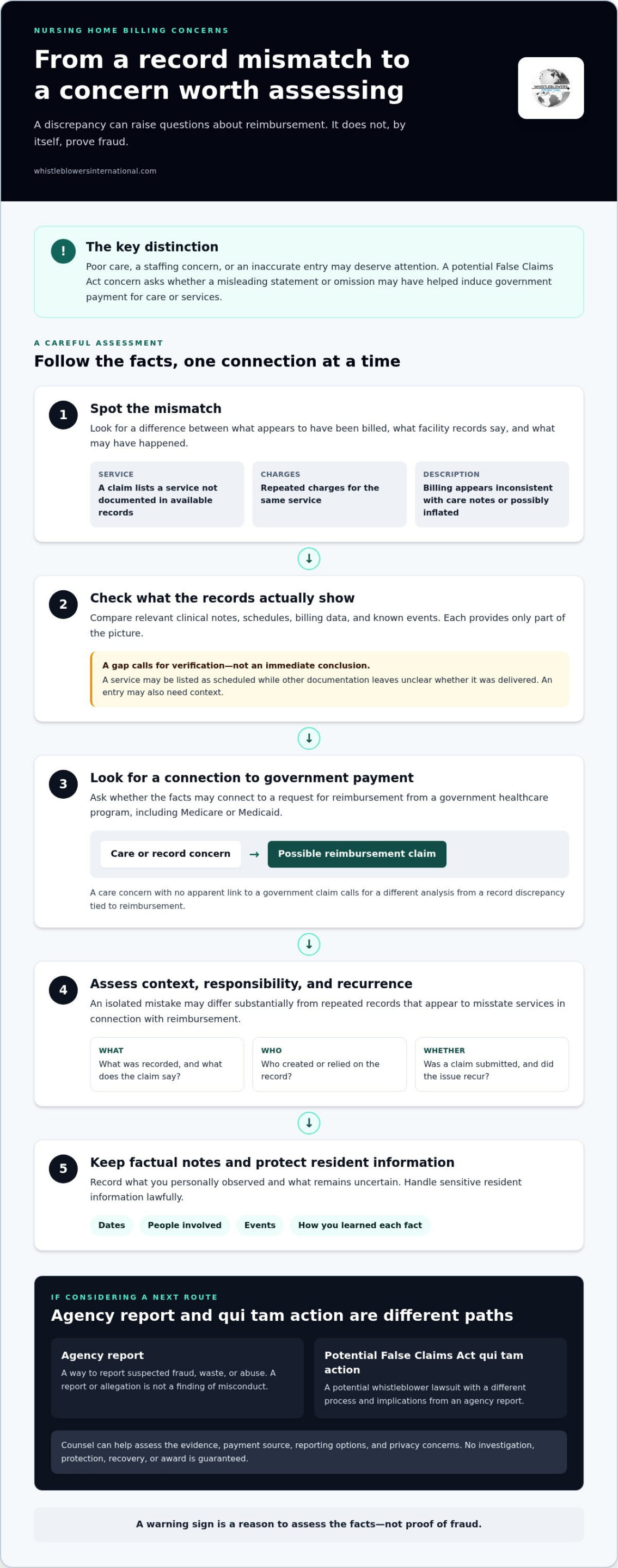
Concerns may surface when billing appears inconsistent with what residents received or what facility records show. For example, a claim might list a service that a resident’s care notes don’t appear to document. Or records might describe care as completed despite other information suggesting it wasn’t provided. These discrepancies warrant careful assessment, not an immediate conclusion of fraud.
Context is decisive. A charting mistake or isolated billing error may differ substantially from records that repeatedly misstate services in a way that appears connected to reimbursement. Useful questions include what was recorded, who created or relied on the record, whether a claim was submitted, and whether the issue recurred. An inaccurate entry matters legally in light of its context and connection to payment.
Why Medicaid and other government payments matter
Nursing facilities may receive reimbursement through government healthcare programs, including Medicaid and Medicare, for eligible care and services. The program involved, the claim’s contents, and how payment was sought can affect which legal framework may apply. A care concern with no apparent connection to a government claim calls for a different analysis from a record discrepancy tied to a reimbursement request.
For a potential nursing home fraud whistleblower, identifying that link is a useful starting point, not a burden to resolve alone. Note what you personally observed, what a record appears to say, and what remains uncertain. Don’t assume a resident’s poor outcome proves a false claim, or that an inaccurate entry proves deliberate deception. A broader overview of the law and its whistleblower provisions appears in this False Claims Act guide.
Separating care quality from reimbursement helps keep a concern precise. If evidence suggests that claims may not match the services or facts behind them, assess the records and circumstances together. That distinction can clarify whether the issue may involve government payment, without making claims that go beyond the evidence.
Which Nursing Home Practices May Signal False Billing?
Potential warning signs often appear as a mismatch between what a facility billed, what its records say, and what may have happened. None of the examples below establishes fraud by itself. A discrepancy can have an innocent explanation, and records may be incomplete or difficult to interpret. The key question is whether reliable facts point to a claim that may have misrepresented care or services in a way connected to payment.
Billing and service-record discrepancies
Possible indicators include claims for services that available records don’t document, repeated charges for the same service, or billing that appears inconsistent with a resident’s care notes. An amount or service description that seems inflated may also warrant review, but only after considering the relevant billing rules, records, and circumstances.
For example, a record may show that a service was scheduled, while other documentation leaves unclear whether it was delivered. That gap calls for verification; it isn’t proof that the facility knowingly submitted a false claim. The HHS-OIG Report Fraud resource describes ways to report suspected fraud, waste, and abuse. A report or allegation, however, is not a finding of misconduct.
An Ohio Attorney General release has described allegations in home-health cases involving billing for services allegedly not performed and time records that allegedly conflicted with the circumstances. Those allegations illustrate why records may be compared with events, but they concern home-health cases, not a nursing home finding, and shouldn’t be treated as proof about another provider.
Care, staffing, and documentation concerns
Care problems or staffing concerns may become relevant to a billing inquiry if they appear connected to specific reimbursement claims. For instance, staffing schedules might help assess whether services listed in a claim could have been delivered as described. But a staffing shortfall or quality-of-care violation alone doesn’t establish False Claims Act fraud. The claim, its contents, and the facts supporting it all need to be examined.
Clinical notes, schedules, and billing data each provide only part of the picture. A note may be entered late, a schedule may not capture every staff assignment, and a billing code may have a technical meaning that isn’t obvious from a resident’s chart. Compare records with attention to timing, definitions, and other relevant information rather than relying on a single document or assumption.
A billing anomaly needs context before it supports an inference of fraud. Repeated discrepancies across residents, dates, or types of service may warrant closer scrutiny, particularly if independent records appear to corroborate the concern. A single unexplained entry may be important, but it can’t establish a pattern or intent on its own.
If you’re considering whether to act as a nursing home fraud whistleblower, keep your observations factual and avoid treating suspicion as a conclusion. Counsel experienced in False Claims Act matters can help evaluate how records and payment information fit together; whistleblower legal representation can help assess whether the facts may support a potential claim.
How Do Agency Reports and False Claims Act Actions Differ?
An agency report and a False Claims Act qui tam case can address related concerns, but they are not the same process. A report alerts an oversight or law enforcement agency to suspected misconduct. A qui tam case is a lawsuit brought under statutory procedures by a private person, known as a relator, on the government’s behalf. A tip and a qui tam complaint are not interchangeable. The facts, source of payment, timing, and applicable law may all affect which route is appropriate.
What a direct report to an agency may do
A direct report can bring information to an agency that oversees or investigates suspected fraud, waste, or abuse. The agency decides whether or how to follow up; submitting a report doesn’t guarantee an investigation, a particular response, or a recovery. Reporting channels, required information, and follow-up practices vary by agency and may change, so the agency’s current procedures matter.
This route may be appropriate when your immediate aim is to alert an agency to a concern. But an agency tip does not, by itself, start a qui tam lawsuit or determine whether the facts satisfy its requirements. The report’s handling and any available protections also depend on the process and circumstances.
When a False Claims Act qui tam route may be relevant
A qui tam action may be considered when evidence suggests false claims for government payment could be involved. The relator starts the case through the statute’s procedures, which differ from submitting a general agency tip. In broad terms, a qui tam complaint is filed under seal, allowing the government an opportunity to review the allegations before the case becomes public. The seal is a procedural requirement, not a guarantee of anonymity or protection from workplace consequences.
Filing requirements, timing rules, eligibility, and the potential effect of earlier reports or lawsuits can be legally significant. An agency report and a court filing may have different consequences, and taking one step doesn’t automatically preserve options under the other. A nursing home fraud whistleblower should have the facts and potential payment sources assessed before deciding which process may fit.
- Agency report: alerts an appropriate agency, which determines whether and how to respond.
- Qui tam action: invokes a statutory lawsuit process on the government’s behalf and has specific filing procedures.
Potential retaliation concerns also deserve careful attention. The False Claims Act includes anti-retaliation provisions, but their application depends on the facts and law; no reporting route can guarantee protection. Legal counsel can help evaluate the evidence, procedural differences, and privacy considerations before action. Counsel can also explain a whistleblower contingency fee structure, including how payment for representation is addressed.
What Should You Do Before Reporting Suspected Nursing Home Fraud?
Careful preparation can make a concern easier to assess while reducing the risk of overstating facts or mishandling sensitive information. Before reporting suspected misconduct, focus on what you know, how you know it, and whether you’re authorized to access or share the information. If records, confidentiality, or possible workplace retaliation are concerns, seek legal advice before taking steps that could expose resident information or affect your position.
Organize observations without overstating conclusions
Separate what you personally observed from what someone told you, what a record appears to show, and what you infer. For example, “I saw the shift schedule for this date” is different from “the facility billed for care that wasn’t provided.” A factual chronology lets counsel or an agency evaluate the evidence without confusing an observation with a conclusion.
- Write down the timeline. Record dates, approximate times, locations, events, and the roles of people involved. If a date is uncertain, say so rather than presenting it as exact.
- Identify how you learned each fact. Note whether you witnessed an event, reviewed information you were authorized to access, or heard it from another person. Keep firsthand knowledge distinct from secondhand accounts.
- Describe possible inconsistencies neutrally. If a care note, schedule, or billing-related document seems inconsistent with an event, describe what each source says and what remains unclear. Avoid presenting “fraud” as an established finding when it is your concern or inference.
- Preserve materials only as authorized. Don’t alter records, create misleading annotations on originals, or coordinate accounts with other potential witnesses. Keep notes and materials you’re lawfully permitted to retain in their original form and record where they came from.
- Pause before accessing or sharing records. Don’t enter systems, copy files, forward documents, or disclose information unless you’re authorized or have received appropriate legal guidance.
Protect resident privacy and consider personal risk
Resident health information and facility records may be confidential. Don’t remove protected health information or confidential records without authorization. Even information you can view as part of your work may not be yours to copy or send elsewhere. If you’re unsure what you may preserve or disclose, get legal advice before moving or transmitting it.
Identity and confidentiality depend on the reporting process and applicable law. An agency report and a potential False Claims Act filing have different procedures; don’t assume either guarantees anonymity. Legal protections against retaliation may apply in some circumstances, but no one can promise absolute protection from workplace consequences. Prompt advice can help you understand potential risks and avoid steps that could compromise sensitive evidence or privacy.
A nursing home fraud whistleblower can take a measured approach: document facts, protect information, and clarify the available route before making a report. If you’re weighing sensitive records or possible retaliation, discuss your whistleblower concerns with counsel before acting.
How Can Whistleblower Counsel Help Assess a Nursing Home Fraud Concern?
Legal counsel can help assess whether suspected nursing home conduct may connect to claims for federal reimbursement and which reporting route, if any, deserves consideration. That assessment involves more than reviewing a troubling record. It may include examining what services were claimed, which program may have paid, how the records relate to the claims, and what evidence is lawfully available. The purpose is to evaluate the facts and options, not to assume an allegation is proven.
What an initial legal assessment can address
Counsel may review your account alongside available claim, billing, and care information to identify gaps, corroboration, and unanswered questions. An attorney can also explain how potential False Claims Act procedures differ from agency reporting and discuss privacy considerations before sensitive material is shared. Advice about timing or eligibility requires a fact-specific legal analysis because those issues depend on the circumstances and applicable law.
A practical assessment may help clarify:
- Whether the suspected conduct appears connected to a government reimbursement claim, and what payment source may be involved.
- Which records or firsthand observations support the concern, and what remains uncertain or needs verification.
- How reporting choices may affect process, privacy, and potential legal rights.
- Whether there are concerns about handling resident information or possible workplace retaliation that should be addressed before taking action.
Representation cannot guarantee that an agency will investigate, that the government will recover funds, that a person will be protected from retaliation, or that a whistleblower will receive an award. Those outcomes depend on the evidence, legal requirements, and decisions made by others. A careful review can help set realistic expectations and identify potential next steps.
Why consider Piacentile & Associates LLP
Piacentile & Associates LLP represents whistleblowers in False Claims Act matters and other federal whistleblower programs. Led by Dr. Joseph Piacentile, Esq., a former whistleblower and attorney, the firm’s team includes former whistleblowers and uses investigative techniques to evaluate matters. This experience informs a disciplined review of evidence, payment sources, reporting options, and privacy concerns.
The firm works on a contingency fee basis and is paid from a monetary award only if it secures one. This fee arrangement doesn’t guarantee that a case will succeed or produce an award. The terms and potential path forward depend on the specific facts.
If you’re weighing whether to proceed as a nursing home fraud whistleblower, you can contact Piacentile & Associates LLP to discuss your concerns and the information you have. A discussion can help clarify what may warrant further evaluation, without treating suspicion as proof or promising a particular result.
Take a Careful First Step
Deciding whether to come forward can feel difficult, particularly when residents’ privacy and your own professional circumstances are involved. You don’t need to resolve every legal question before seeking guidance. A measured conversation can help you understand what your information may show, what remains uncertain, and how to approach the next step without treating suspicion as proof.
Piacentile & Associates LLP represents whistleblowers in False Claims Act matters. Its team includes former whistleblowers and uses investigative techniques to evaluate potential claims. The firm works on a contingency fee basis and is paid from a monetary award only if it secures one; representation does not guarantee an investigation, recovery, protection, or award.
If you’re weighing whether to act as a nursing home fraud whistleblower, discuss your concerns and the facts you can lawfully share with counsel. Discuss your nursing home fraud concerns with Piacentile & Associates LLP. A thoughtful first step can help you move forward with greater clarity.
Frequently Asked Questions
Is poor care at a nursing home automatically fraud under the False Claims Act?
No. Poor care may raise urgent resident-safety or regulatory concerns, but it isn’t automatically fraud under the False Claims Act. The legal question is whether facts may connect a knowingly false statement or claim to government payment. A resident’s unmet care needs alone, for example, don’t establish a false billing claim. If records or other evidence suggest reimbursement claims misrepresented services, that connection may warrant legal assessment.
Can a nursing home employee report suspected Medicaid billing fraud?
Yes. An employee can report a concern about suspected Medicaid billing, whether the information comes from firsthand observations or records they’re authorized to access. Being an employee doesn’t, by itself, establish that a person qualifies for a qui tam case or an award. A nursing home fraud whistleblower should keep the account factual, avoid sharing resident information without authorization, and consider legal advice about reporting channels and potential rights.
Can I report nursing home fraud anonymously?
It depends on the reporting channel and applicable rules, so don’t assume a report will remain anonymous. Some agency processes may allow a person to withhold identifying information, but that can affect follow-up and varies by agency. A False Claims Act qui tam case is not simply an anonymous tip: the relator’s identity is part of the legal process, even though filings may initially be under seal.
What protection does a nursing home whistleblower have from retaliation?
The False Claims Act includes anti-retaliation provisions, but whether they apply depends on the facts and legal requirements. Relevant details may include what the employee did, whether the conduct was connected to potential fraud, and the employer’s response. Protection isn’t automatic or absolute, and retaliation concerns can involve separate legal questions. Record relevant workplace events factually and seek advice before making decisions based on assumed protection.
Do I need proof before speaking with a whistleblower lawyer?
No. You can seek legal guidance to understand whether what you know may warrant further review, even if you don’t have complete evidence. Be ready to distinguish what you personally observed from what others told you, and identify what remains uncertain. Don’t try to fill evidence gaps by accessing systems or taking records without authorization. A lawyer can assess the information you can lawfully share and discuss possible next steps.
Can a nursing home whistleblower receive an award?
Potentially. Under the False Claims Act, a qualifying relator may receive a share of the government’s recovery in a successful qui tam case. The share generally falls within a statutory range of 15% to 30%, depending on the case and applicable rules. An award isn’t guaranteed, and the amount depends on the outcome and legal circumstances. The firm’s contingency fee is separate from the government’s determination of a relator’s share.
How long do I have to report suspected nursing home fraud?
There isn’t one deadline that safely applies to every concern. False Claims Act limitation rules, the facts, and procedural issues can affect how much time is available; delays may also complicate evidence gathering. An agency report and a qui tam filing may follow different rules, so don’t assume that submitting a tip preserves every legal option. Ask counsel to assess timing promptly rather than relying on a general estimate.