
The decisive issue is whether suspected EHR misconduct may have caused false claims involving government funds. In the United States, reporting that conduct typically means filing a qui tam complaint under the False Claims Act. The government investigates after filing and decides whether to intervene; an electronic health record fraud lawyer can help assess whether the facts support this route and how to present them.
It’s understandable to hesitate before reporting concerns involving an employer, a vendor, or records encountered at work. Because a complaint can prompt serious scrutiny, it is important to distinguish a documentation problem from conduct that may have defrauded a federal program.
This article explains how whistleblowers can raise suspected EHR fraud with the government, what kinds of vendor conduct may warrant attention, and what can follow after a complaint. It also outlines the potential protections and rewards available under the False Claims Act, so you can better understand the process before deciding what to do.
Key Takeaways
- Assess whether suspected EHR misconduct may have caused false claims involving federal funds; a qui tam complaint can prompt a government investigation.
- Look beyond billing errors: alleged misrepresentations about software capabilities, incentives, or patient-data safeguards may also warrant scrutiny.
- Understand how the False Claims Act and other healthcare fraud laws may apply before deciding how to report suspected conduct.
- When evaluating legal representation, consider experience with False Claims Act cases, evidence involving EHR systems, and the risks whistleblowers may face.
How do whistleblowers trigger federal EHR fraud investigations, and how should a firm respond?
Under the False Claims Act, a private individual with relevant information can file a qui tam complaint alleging fraud involving government funds. The government investigates the allegations and decides whether to intervene. Current and former employees may have direct knowledge of electronic health record design, implementation, or billing.
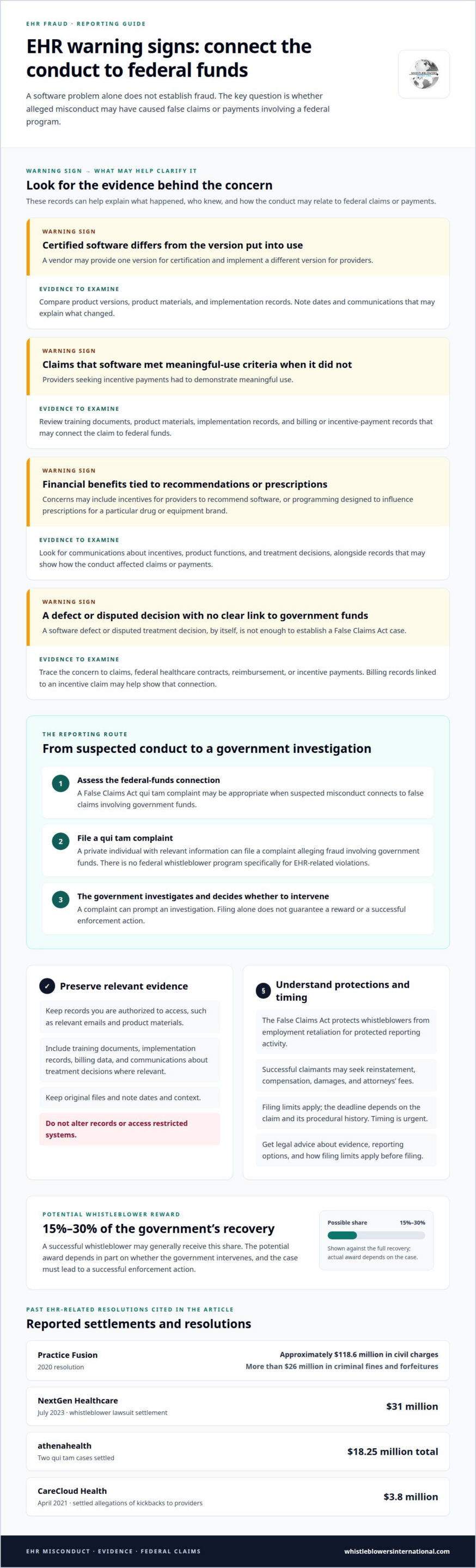
A successful whistleblower may generally receive 15% to 30% of the government’s recovery. The potential award depends in part on whether the government intervenes, and a complaint alone does not qualify for a reward. The case must lead to a successful enforcement action. Evidence should connect the alleged conduct to claims or payments involving federal funds.
Past EHR cases show how allegations can lead to government recoveries. NextGen Healthcare agreed to pay $31 million in July 2023 to settle a whistleblower lawsuit alleging False Claims Act violations. The government settled two qui tam cases against athenahealth for $18.25 million total. CareCloud Health agreed to pay $3.8 million in April 2021 to settle allegations of kickbacks to providers.
Relevant evidence may include differences between software versions used for certification and those implemented by providers. Records may also show claims that software met meaningful-use criteria when it did not. Other concerns include financial incentives tied to prescriptions or payments intended to influence providers’ recommendations. Dates, communications, product versions, and billing records can help investigators assess how the conduct affected federal claims.
The False Claims Act protects whistleblowers from employment retaliation for protected reporting activity. Successful claimants may seek reinstatement, compensation, damages, and attorneys’ fees. Employers should preserve relevant records, document their review, and avoid actions that could appear retaliatory. For example, a sudden change to a reporter’s duties after they raise concerns warrants careful, documented review.
Filing limits apply to False Claims Act cases involving electronic health record fraud, and the applicable deadline depends on the claim and its procedural history. Treat timing as urgent and get legal advice about how the limits apply before filing.
Electronic health record fraud and reporting
Suspected electronic health record fraud can involve more than inaccurate medical notes. A vendor may misrepresent software capabilities, provide different versions for certification and implementation, or claim its product meets meaningful-use criteria when it does not. Other warning signs include financial benefits offered to encourage providers to recommend software, or programming designed to influence prescriptions for a particular drug or equipment brand.
Reporting typically involves a qui tam complaint under the False Claims Act when the suspected conduct connects to government funds. There is no federal whistleblower program specifically for EHR-related violations. Instead, allegations may concern false claims tied to incentive payments, federal healthcare contracts, or government reimbursement. Practice Fusion’s 2020 resolution illustrates the stakes: it agreed to pay approximately $118.6 million in civil charges and more than $26 million in criminal fines and forfeitures.
Evidence should help explain what happened, who knew, and how the conduct relates to claims or federal payments. Preserve records you’re authorized to access, such as relevant emails, product materials, training documents, implementation records, billing data, and communications about treatment decisions. Keep original files and note dates and context. Don’t alter records or access restricted systems.
For example, comparing a product’s stated capabilities with its implemented functions may help clarify an alleged misrepresentation. A billing record linked to an incentive claim may help show how the conduct affected government funds. A lawsuit requires more than a software defect or a disputed treatment decision: the facts must support an allegation of fraud involving claims or payments.
Record the concern’s timeline and the people or systems involved, then seek advice promptly about reporting options and preserving evidence. A False Claims Act whistleblower filing may be appropriate when the facts support that route; the complaint can prompt a government investigation.
What laws apply to electronic health record fraud in the United States?
Several federal laws may apply to suspected electronic health record misconduct, depending on the conduct and its connection to government programs. The False Claims Act may apply when healthcare providers or vendors cause false claims involving federal funds. The Anti-Kickback Statute addresses payments intended to reward or secure referrals for services or items paid for by Medicare and Medicaid. A software problem alone does not establish a violation.
Under the False Claims Act, the government can seek recovery of money paid because of false claims, including when the submitting company did not know a claim was false. An electronic health record vendor could face scrutiny if its conduct caused providers to submit claims based on misrepresented software capabilities. The central question is how the alleged conduct connects to claims paid by a federal healthcare program.
The HITECH Act, passed by Congress in 2009, encouraged adoption and meaningful use of electronic health records. Providers seeking incentive payments had to demonstrate meaningful use, while EHR companies had to meet applicable HHS-adopted certification criteria. A mismatch between a certified product and the version implemented for providers can therefore raise questions about representations tied to certification or incentive payments.
Other named laws include Stark and EKRA, which are identified as relevant to healthcare fraud violations. The Computer Fraud and Abuse Act, codified at 18 U.S.C. § 1030, criminalizes knowingly transmitting code, commands, or programs that cause unauthorized damage to a protected computer. Its focus differs from false-claim allegations: unauthorized computer damage is not the same issue as inaccurate certification or billing. Identifying the conduct, affected claims, and government funds helps determine which legal framework deserves closer examination.
If the facts suggest false claims or improper payments, discuss a potential healthcare fraud report and the legal frameworks that may apply.
What should I look for when comparing EHR fraud lawyers?
Look for experience handling False Claims Act matters, not just general healthcare disputes. Ask how the lawyer evaluates the connection between alleged electronic health record conduct and claims paid by federal programs. A software feature may be misleading, for example, but the legal analysis must also address whether the conduct caused false claims or improper government payments.
Technical understanding matters. An electronic health record fraud lawyer should be able to examine how software was certified, implemented, and used by providers. Ask how the lawyer would assess differences between certified product versions and those installed in healthcare settings. Clear answers should connect technical records to the alleged representations, incentives, or billing at issue.
Consider the lawyer’s approach to evidence and investigation. Relevant material may include emails, implementation records, product documentation, billing data, and communications about prescriptions or provider recommendations. Ask how the legal team would organize those records, identify gaps, and develop a clear account of who acted, what happened, and how federal funds were affected.
Discuss reporting procedures and communication before making a decision. A lawyer should explain how a False Claims Act qui tam complaint relates to the facts, what government investigation may follow, and how the government’s intervention decision can affect the case. They should also address confidentiality and retaliation concerns in practical terms, without promising a particular outcome.
Look for candid, specific answers about the case’s strengths, uncertainties, and next steps. Ask who will handle substantive work, how updates will be provided, and what information is needed to evaluate the allegations. A lawyer who distinguishes a documentation error from evidence of fraud can help focus the inquiry. Compare the quality and clarity of the analysis, not confident claims about results.
Take the Next Step With a Clear Record
If you’re considering reporting suspected electronic health record misconduct, start by preserving relevant information and understanding how the facts fit together. A careful review can distinguish a technical or documentation issue from conduct that may have affected federal claims. An electronic health record fraud lawyer can assess the legal path and help you consider how to proceed.
Piacentile & Associates LLP handles False Claims Act / Qui Tam Lawsuits, SEC Whistleblower Program Filings, and IRS Whistleblower Program Filings. The appropriate route depends on the conduct and the government funds or programs involved. A focused discussion with the firm can help clarify which details matter and what questions remain before a filing decision.
Contact Piacentile & Associates LLP to discuss suspected fraud and potential reporting options. Taking a careful, informed next step can help you move forward with greater clarity.
Piacentile & Associates LLP and Electronic Health Record Fraud
If you are considering legal action over suspected electronic health record fraud, Piacentile & Associates LLP represents individuals in False Claims Act / Qui Tam Lawsuits. This may be a relevant next step when you are assessing whether concerns about electronic health record practices could support a whistleblower lawsuit.
Piacentile & Associates LLP also handles filings through the SEC, IRS, FinCEN, and CFTC whistleblower programs, as well as Import Export Customs Fraud Legal Action.
Frequently Asked Questions
How Do I Report an Electronic Health Records (EHR) Violation to the Government?
For suspected fraud involving federal healthcare funds, reporting commonly proceeds through a False Claims Act qui tam complaint. Before deciding how to proceed, organize what you personally know, when you learned it, and which records support your account. For example, distinguish vendor statements about software functions from records showing how providers implemented or billed using those functions. Get legal advice promptly about reporting options and evidence handling.
What is EHR Fraud (and When Should You Report It)?
Electronic health record fraud involves alleged deception connected to electronic records and government payments, not every technical defect or charting error. A concern may warrant reporting when records indicate, for example, that a vendor misrepresented a software capability tied to federal certification, or that electronic health record functions influenced claims or prescribing for financial gain. Preserve relevant information and seek advice when you can explain the suspected conduct and its connection to public funds.
Are EHR fraud whistleblowers protected from retaliation?
The False Claims Act protects whistleblowers from employment retaliation for protected reporting activity. Successful claimants may seek remedies that include reinstatement, compensation, damages, and attorneys’ fees. Keep a dated record of relevant workplace actions, such as a sudden change in duties after raising a concern, alongside earlier performance records or communications. These details can help assess whether an employment action may be connected to reporting.
Can EHR fraud whistleblowers receive rewards?
Yes. A whistleblower may generally be eligible for 15% to 30% of the government’s recovery in a successful False Claims Act case. The award depends in part on whether the government intervenes, and a complaint by itself does not earn a reward. The case must lead to a successful enforcement action. Eligibility and the potential award depend on the case, so discuss the specific facts with counsel.
Do I Need a Whistleblower Attorney to Report an EHR Violation?
For a potential False Claims Act qui tam case, seek legal guidance before submitting a complaint. The process involves presenting allegations and evidence in a formal legal action, and premature disclosure can affect how information is handled. An attorney can help organize the facts, identify the connection to government claims, and explain possible reporting paths. Share only information you’re authorized to access, and don’t alter records or enter restricted systems.
What does an electronic health record fraud lawyer do?
An electronic health record fraud lawyer evaluates whether the facts may support a whistleblower action, develops the evidence, and advises on reporting strategy and retaliation concerns. Piacentile & Associates LLP represents individuals in U.S. and international U.S. legal whistleblower actions on a contingency fee basis. Led by Dr. Joseph Piacentile, Esq., known as “Dr. Joe,” the firm requires strong information and evidence to evaluate a case. Whistleblower cases are very complex and take a long time to resolve. Past results do not guarantee future outcomes.